| Key Metric / Aspect | Explanation and Details |
| Metric Name | Employee Turnover Rate |
| Basic Definition | The percentage of workers who leave a company during a specific period of time. |
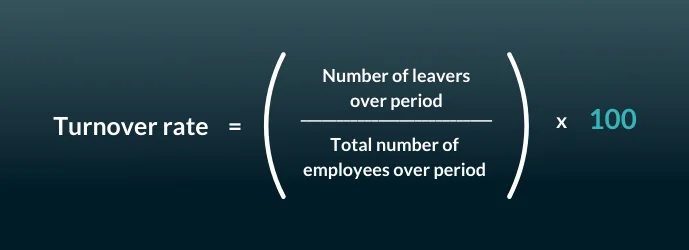
| Standard Formula | (Total Separations / Average Number of Employees) × 100 |
| Common Timeframes | Monthly, Quarterly, and Annually |
| Target Ideal Benchmark | Generally 10% or lower for healthy company cultures |
| High-Turnover Industries | Restaurants, Retail, Hospitality, and Warehousing |
| Low-Turnover Benchmark | Costco (Known for industry-leading retention rates) |
| Primary Goal | To measure workplace satisfaction, retention, and hiring efficiency |
Understanding Why Workforce Retention Matters for Your Business
Running a successful company requires keeping great talent on your team for as long as possible. Learning how to calculate employee turnover rate helps you track how many people leave your business each year. When team members quit regularly, it costs time, money, and energy to find new workers to replace them. Understanding your numbers gives you real power to make your workplace better for everyone involved.
In my years working with growth-oriented teams, I have seen bright managers ignore these critical numbers. They wonder why productivity drops and why hiring costs keep soaring out of control. Once you master how to calculate employee turnover rate, you can catch workplace problems before they grow into costly crises. Let us break down these simple math steps together so you can protect your team culture effectively.
What Is Employee Turnover Rate and Why Should You Care?
Before we dive into the exact numbers, we must ask: what is employee turnover rate? Simply put, it shows the percentage of staff members who depart your organization over a set period. This includes people who quit voluntarily, get fired, or retire from their roles. Knowing what is employee turnover rate allows leaders to spot underlying organizational issues very early on.
Tracking your employee turnover rate gives you a clear snapshot of your company’s overall health. High numbers mean employees might be unhappy with their pay, management style, or daily workload. Low numbers show that your team feels valued, safe, and motivated to stay long-term. Every smart business owner tracks this metric every month to keep their team strong and fully supported.
The Clear Employee Turnover Rate Definition Explained Simply
To keep things super clear, let us look at the official employee turnover rate definition. It is the ratio of employee departures to the average number of total employees over a chosen timeframe. Usually, businesses measure this monthly or annually to compare progress over time. Knowing the employee turnover rate definition helps managers speak the same language across different HR departments.
It is helpful to remember that not all turnover is bad for your organization. Sometimes, poor performers leave, making room for fresh talent with better skills and positive energy. However, losing top-performing workers always hurts team morale and project timelines. That is why calculating your numbers accurately gives you actionable insights to protect top talent.
The Step-by-Step Employee Turnover Rate Formula You Need
Calculating your numbers is super easy once you know the core employee turnover rate formula. You do not need an advanced math degree to get an accurate score for your company. First, count how many employees left during the month or year. Next, find the average number of workers you employed during that exact same timeframe.
Here is the exact math breakdown for the employee turnover rate formula:
$$\text{Turnover Rate} = \left( \frac{\text{Number of Separations}}{\text{Average Number of Employees}} \right) \times 100$$
To find your average number of employees, add your starting staff count to your ending staff count. Then, divide that combined number by two. Finally, divide your total departures by your calculated average and multiply by 100.
Practical Example: How to Calculate Employee Turnover Rate
Let us walk through a real-world exercise so you can master how to calculate employee turnover rate. Imagine you start the year with 100 employees on your team. By the end of the year, you have 110 employees, but 10 people left during those twelve months. First, add 100 and 110 to get 210, then divide by 2 to get an average of 105 workers.
Now, take your 10 departures and divide them by your average of 105 employees. You get 0.0952, which equals a 9.5% annual rate after multiplying by 100. Congratulations, you now know how to calculate employee turnover rate for any team size! Practicing this simple math regularly makes tracking retention completely stress-free for leadership teams.
Why You Should Use an Employee Turnover Rate Calculator
While simple math works great, using a digital employee turnover rate calculator saves valuable time. Most modern HR software platforms feature a built-in employee turnover rate calculator tool. These automatic tools instantly process monthly hiring inputs, voluntary resignations, and retirements with zero errors.
Using automated calculation tools helps fast-growing companies prevent human mathematical errors during monthly audits. They allow you to filter results by department, office location, or specific manager groups. This granular view reveals whether turnover is isolated to one team or spread across the entire company.
Performing a Detailed Employee Turnover Rate Calculation Manual Check
Doing a manual employee turnover rate calculation once a month keeps managers deeply connected to their staff numbers. During your employee turnover rate calculation, always separate voluntary resignations from involuntary terminations. A voluntary departure means an employee chose to quit, while an involuntary departure means you let them go.
Keeping these two categories separate gives you far better insights into workplace culture problems. If voluntary quits are high, your compensation packages or work environment might need immediate improvement. If involuntary firings are high, your initial hiring process or job training programs might be failing.
What Is a Good Employee Turnover Rate for Most Businesses?
A question every manager asks is: what is a good employee turnover rate? Generally speaking, a good employee turnover rate sits at around 10% or lower annually. Keeping your departures near 10% means your workplace maintains strong stability while allowing healthy room for fresh talent.
However, defining a normal employee turnover rate depends heavily on your specific business industry. Tech companies often see rates around 13%, while healthcare businesses frequently experience higher rotation. Understanding your industry context prevents unnecessary panic when assessing your own workplace retention performance.
Comparing the Average Employee Turnover Rate Across Big Industries
When analyzing your numbers, you must look at the average employee turnover rate for your market. A retail employee turnover rate typically hovers around 60% every single year due to seasonal work. Meanwhile, the restaurant employee turnover rate often shoots past 70% or 80% due to fast-paced student shifts.
In specialized sectors, like housing management, the multifamily employee turnover rate sits near 30% annually. Even medical tech leaders like Bausch + Lomb monitor metrics carefully, keeping the Bausch + Lomb employee turnover rate competitive against rival health manufacturers. Comparing your metrics against market averages keeps your expectations fair and grounded.
Real-World Examples: Amazon vs. Home Depot vs. Costco
Looking at retail giants shows how culture impacts workplace retention in massive ways. The amazon employee turnover rate in warehouses often exceeds 100% annually due to strict productivity quotas. Similarly, the home depot employee turnover rate reflects typical retail sector shifts, hovering near industry averages.
In sharp contrast, the costco employee turnover rate stays remarkably low, often dropping below 10% after probationary periods. Why does Costco win at retaining staff? They offer higher starting pay, great healthcare benefits, and predictable work schedules. Their impressive numbers prove that treating workers with respect creates unmatched workplace stability.
Smart Strategies: How to Reduce Employee Turnover Rate Today
Now that you know the numbers, let us discuss how to reduce employee turnover rate effectively. First, offer competitive salary rates and clear health benefits to support your workers’ lives. People rarely leave jobs where they feel financially secure, appreciated, and respected by leadership.
Second, invest heavily in employee career growth, skill training, and clear promotion pathways. Workers quit when they feel stuck in dead-end roles without any future hope. Additionally, train your managers to communicate with empathy and offer flexible schedule options. Simple human kindness and flexible hours work wonders to keep top performers happy long-term.
Frequently Asked Questions (FAQs)
What is the simplest formula to calculate employee turnover rate?
Divide the total number of departures by the average number of employees during the same period, then multiply the result by 100.
Is a 0% turnover rate ideal for a growing business?
Not always! A 0% rate can mean team stagnation or fear of change. A small turnover rate allows fresh talent and new ideas to enter your company naturally.
How often should HR managers calculate employee turnover rate?
Most HR professionals track these numbers monthly to spot sudden shifts and calculate official comparisons once every quarter and year.
What is the difference between voluntary and involuntary turnover?
Voluntary turnover happens when an employee chooses to resign or retire. Involuntary turnover happens when an employer terminates or lays off a staff member.
Why is retail employee turnover rate usually so high?
Retail roles often attract temporary, part-time, or student workers. Lower entry wages and seasonal hiring spikes naturally lead to higher departure rates overall.
How does high turnover hurt a company’s bottom line?
Replacing a staff member costs thousands of dollars in recruiter fees, onboarding time, lost team productivity, and training resources.
Conclusion: Start Tracking Your Numbers to Build a Stronger Team!
Knowing how to calculate employee turnover rate gives you the insights needed to build a happy, thriving workforce. By tracking your departures regularly, you can fix team issues early, save hiring money, and keep top talent loyal.
Do not wait for valuable staff members to hand in their resignations. Run your retention math today, analyze your workplace environment, and make positive changes for your team. What steps will you take this week to improve worker retention in your company? Share your thoughts and experience in the comments below!